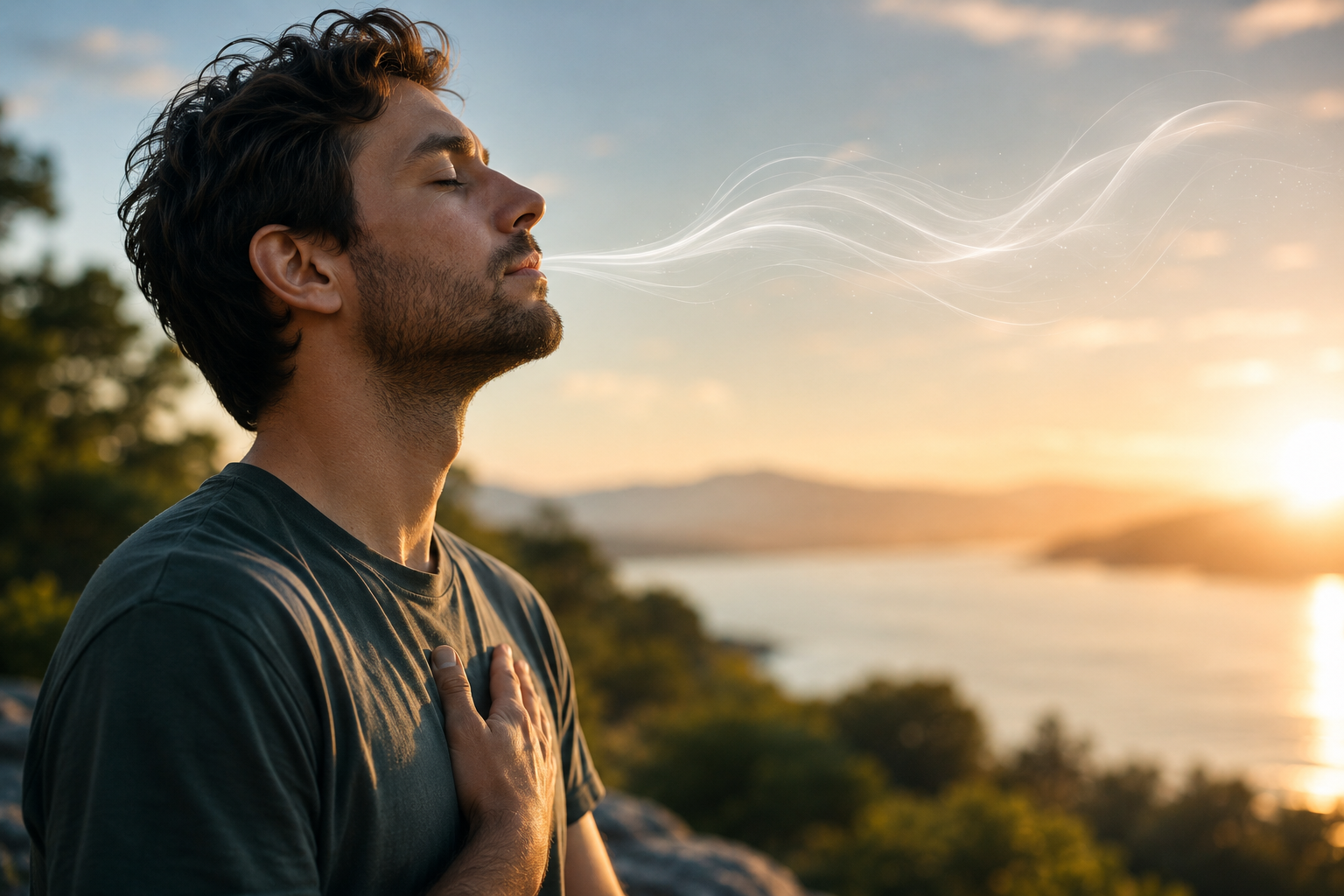
The Science Behind Deep Breathing: How One Simple Habit Can Calm Your Nervous System
Most of us breathe without giving it a second thought.
It happens automatically, every moment of every day. Yet something so ordinary has an extraordinary influence on how we think, feel, and respond to stress.
When life becomes overwhelming, many people search for complicated solutions. In reality, one of the most effective tools for calming the mind has been with you all along—your breath.
Modern research continues to show that intentional breathing can help regulate the nervous system, reduce stress, and improve emotional well-being. Best of all, it is available anytime and anywhere.
Why Breathing Matters
When you experience stress, your body activates the sympathetic nervous system—often called the “fight or flight” response.
Your heart rate increases.
Your breathing becomes quicker and shallower.
Your muscles tighten.
Your body prepares for action.
This response is incredibly helpful during real danger, but modern stressors such as deadlines, financial concerns, and constant notifications can keep the body in this heightened state far longer than intended.
Fortunately, your breath can help signal that it is safe to slow down.
Your Breath Is Connected to Your Nervous System
Unlike many automatic functions in the body, breathing is unique because it can be both automatic and intentional.
When you slow your breathing, especially by making your exhale slightly longer than your inhale, you help activate the parasympathetic nervous system—sometimes called the “rest and digest” system.
This shift may help:
Slow your heart rate
Reduce muscle tension
Improve focus
Lower feelings of stress
Promote relaxation
Increase emotional regulation
While deep breathing is not a cure for life’s challenges, it can help your body respond to those challenges more effectively.
A Simple Breathing Exercise
The next time you begin feeling overwhelmed, try this simple practice.
Sit comfortably with both feet on the floor.
Inhale slowly through your nose for four seconds.
Exhale gently through your mouth for six seconds.
Repeat for two to five minutes.
Notice how your shoulders begin to soften.
Notice your jaw relaxing.
Notice your thoughts becoming a little less urgent.
Sometimes the goal is not to eliminate stress—it is simply to create enough space to respond instead of react.
When to Practice
Intentional breathing is most effective when it becomes a daily habit rather than something you only remember during stressful moments.
Consider practicing:
Before an important meeting
During your lunch break
After work
Before bed
While sitting in traffic
Before responding to a difficult conversation
Just a few minutes each day can make a meaningful difference over time.
Small Habits Create Lasting Change
Managing stress does not require dramatic changes overnight.
More often, it is the consistent practice of small habits that builds resilience.
Mindfulness, movement, quality sleep, time in nature, and intentional breathing all work together to support a healthier, more balanced nervous system.
The more often you practice these skills, the easier they become to access when life becomes challenging.
Final Thoughts
The breath is something we carry with us every moment of every day.
It is simple.
It is free.
And it is one of the most powerful tools we have for supporting both our physical and mental well-being.
The next time you feel overwhelmed, pause before reacting.
Take one slow breath.
Then another.
You may be surprised how much can change in just a few moments.
Ready to Build a More Resilient Mind?
At Grounded Mind Studios, we help individuals, groups, and organizations develop practical skills for managing stress through mindfulness, yoga, breathwork, and holistic wellness.
Whether you are looking to reduce everyday stress, improve focus at work, or create healthier habits that last, we are here to help.
Explore our mindfulness coaching, private and group yoga classes, or corporate wellness programs to discover how simple, evidence-based practices can help you live with greater calm, clarity, and resilience.
Visit GroundedMindStudios.com or contact us today to learn more about upcoming classes, workshops, and personalized wellness services.
References
Brown, R. P., & Gerbarg, P. L. (2005). Sudarshan Kriya Yogic Breathing in the Treatment of Stress, Anxiety, and Depression.
Harvard Health Publishing. Relaxation Techniques: Breath Control Helps Quell Errant Stress Response.
National Center for Complementary and Integrative Health. Relaxation Techniques for Health.
American Psychological Association. Stress Effects on the Body.