
Stress vs. Anxiety: Understanding the Difference
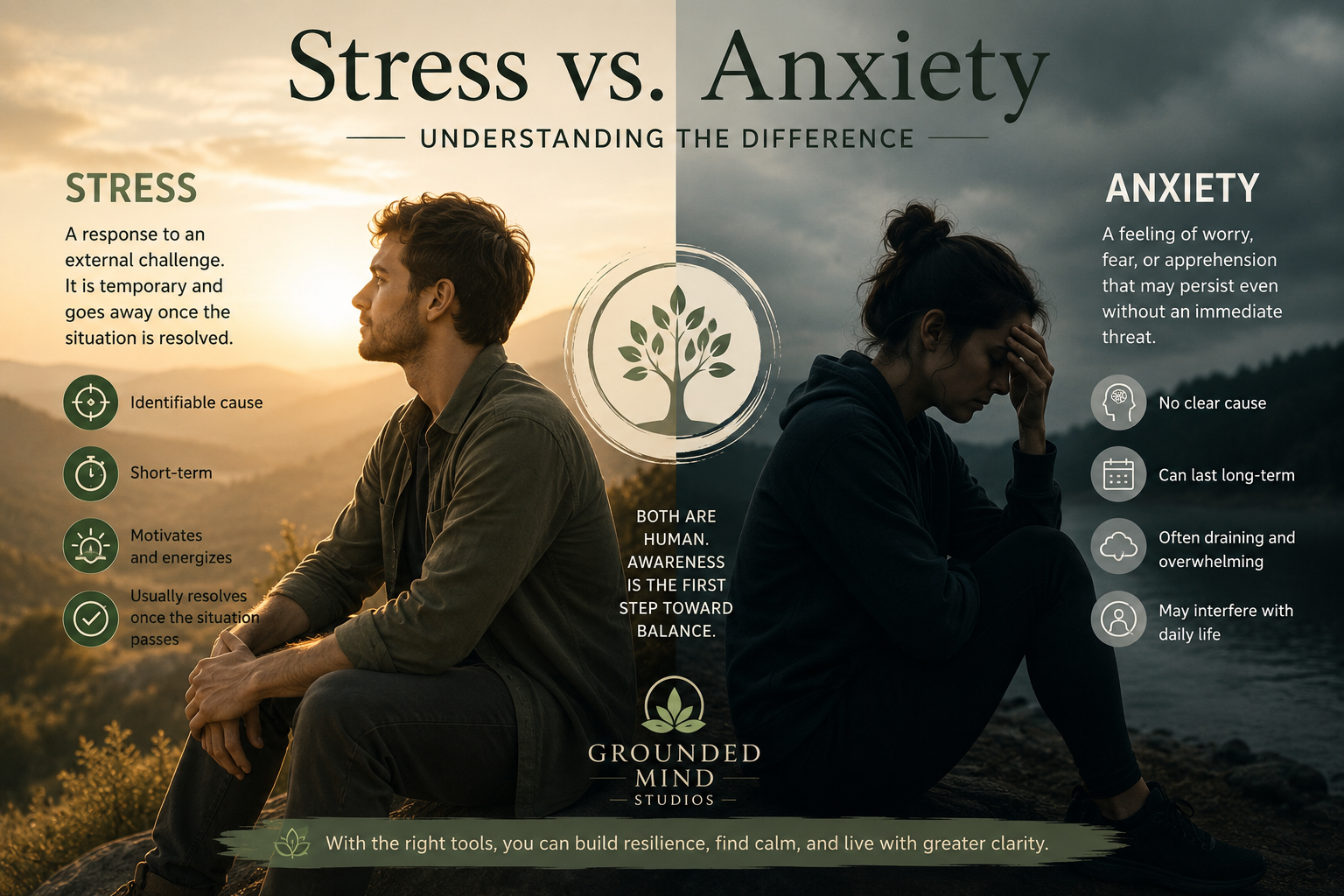
The words stress and anxiety are often used interchangeably, but they are not the same thing. While they share many symptoms, understanding the difference can help you better recognize what your mind and body are experiencing—and choose healthy ways to respond.
Both stress and anxiety are part of being human. Neither is inherently “bad.” In fact, each serves an important purpose. The challenge begins when these responses become frequent, overwhelming, or begin interfering with daily life.
What Is Stress?
Stress is your body’s natural response to a challenge or demand.
A looming work deadline, financial concerns, family responsibilities, or preparing for an important presentation can all trigger a stress response. When your brain perceives a challenge, it activates the sympathetic nervous system and releases hormones such as cortisol and adrenaline.
This response prepares your body to act quickly.
You may notice:
A faster heartbeat
Faster breathing
Muscle tension
Increased alertness
Sweaty palms
Temporary digestive discomfort
In many cases, stress decreases once the situation has passed. You finish the project, resolve the conflict, or make it through the event, and your nervous system gradually returns to a more balanced state.
Stress is often connected to an identifiable cause.
What Is Anxiety?
Anxiety is more than feeling stressed.
It is a feeling of apprehension, worry, or fear that may continue even when there is no immediate threat.
Someone experiencing anxiety may find themselves worrying about situations that have not happened—or may never happen at all. Thoughts can become repetitive, making it difficult to relax even during moments that should feel safe.
Common symptoms may include:
Persistent worry
Restlessness
Difficulty concentrating
Trouble sleeping
Muscle tension
Racing thoughts
Increased heart rate
Feeling on edge
Occasional anxiety is a normal part of life. However, persistent or severe anxiety that interferes with work, relationships, or everyday functioning may be part of an anxiety disorder and deserves evaluation by a qualified healthcare or mental health professional.
How They Overlap
Stress and anxiety share many physical symptoms because both activate similar biological pathways.
You might experience:
Fatigue
Headaches
Tight shoulders or neck
Digestive issues
Difficulty sleeping
Irritability
Trouble focusing
Because these symptoms overlap, many people are unsure whether they are experiencing stress, anxiety, or a combination of both.
The Relationship Between Stress and Anxiety
Chronic stress can contribute to feelings of anxiety.
When your nervous system spends weeks or months in a heightened state of alertness, it can become more difficult to shift back into a calm, regulated state. Everyday challenges may begin to feel more overwhelming, and worry can become more frequent.
This is one reason why learning healthy stress management skills is so valuable. Reducing chronic stress may also help reduce the intensity or frequency of anxious feelings for many people.
Healthy Ways to Support Your Nervous System
While every person is different, many people benefit from daily habits that help regulate the nervous system.
These may include:
Mindfulness practices
Regular physical activity
Yoga and gentle movement
Slow, intentional breathing
Spending time outdoors
Journaling
Consistent sleep habits
Maintaining supportive relationships
These practices are not about avoiding life’s challenges. They help create space between your experiences and your reactions, allowing you to respond with greater clarity and resilience.
When to Seek Additional Support
Everyone experiences stress and occasional anxiety.
However, if feelings of worry become persistent, overwhelming, or begin affecting your work, relationships, sleep, or overall quality of life, it is important to speak with a licensed healthcare or mental health professional. Effective treatments are available, and seeking help is a sign of strength—not weakness.
Mindfulness, yoga, and stress management techniques can complement professional care, but they are not substitutes for diagnosis or treatment when a mental health condition is present.
Final Thoughts
Understanding the difference between stress and anxiety is not about labeling yourself—it is about becoming more aware of how your mind and body respond to life’s challenges.
The more awareness you develop, the more intentionally you can care for yourself.
At Grounded Mind Studios, our goal is to help people build practical skills that support resilience, reduce the effects of chronic stress, and promote lasting well-being through mindfulness, movement, breathwork, and holistic wellness.
A grounded mind does not eliminate life’s challenges.
It helps you meet them with greater calm, clarity, and confidence.
References
American Psychological Association. (2024). Stress effects on the body.
National Institute of Mental Health. Anxiety Disorders.
National Institute of Mental Health. Caring for Your Mental Health.
Mayo Clinic. Anxiety Disorders: Symptoms and Causes.
Harvard Health Publishing. Understanding the Stress Response.